


Файл:PIA17993-DetectorsForInfantUniverseStudies-20140317.jpg


Исходный файл (3000 × 2884 пкс, размер файла: 842 КБ, MIME-тип: image/jpeg)
Описание
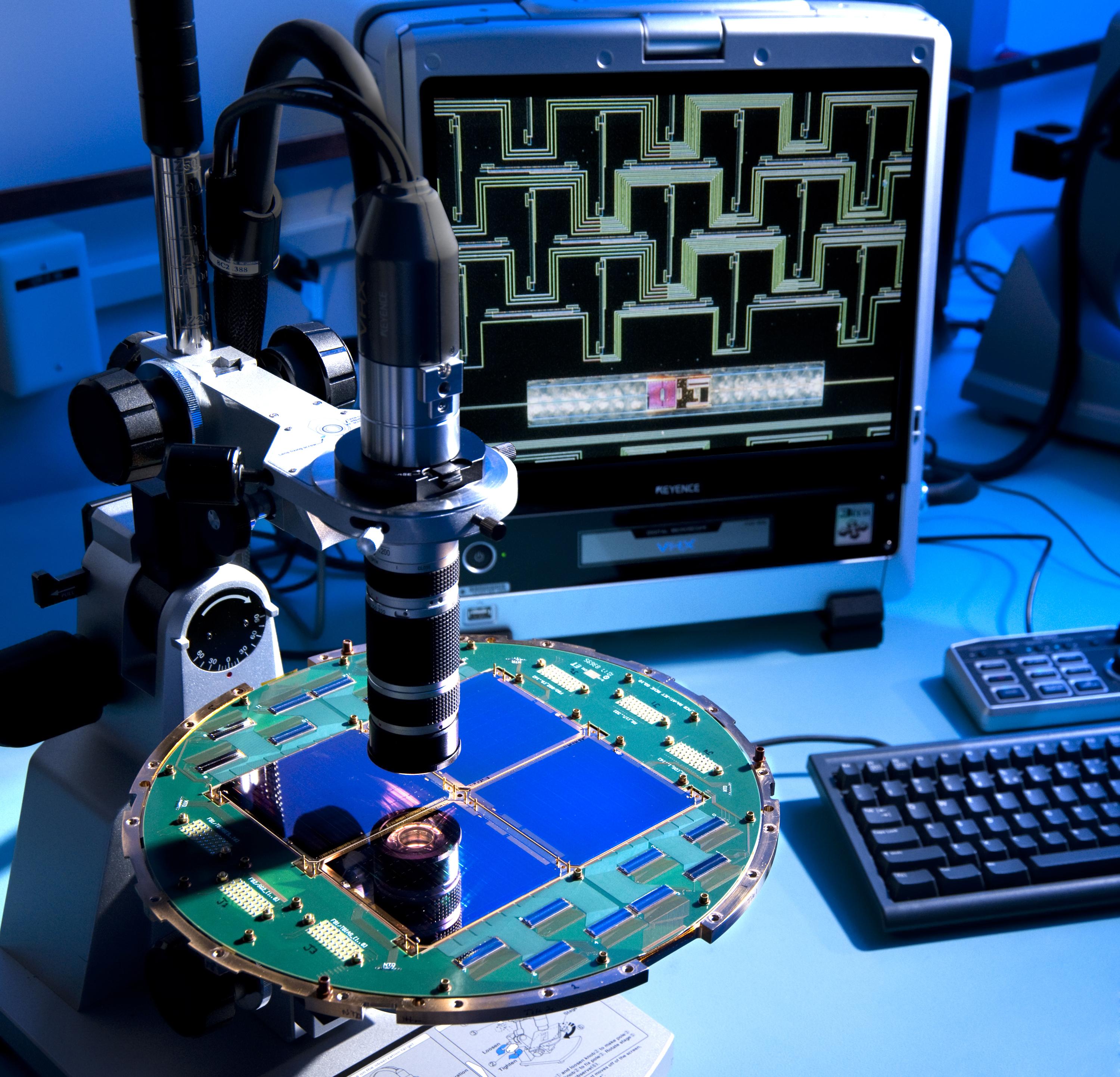
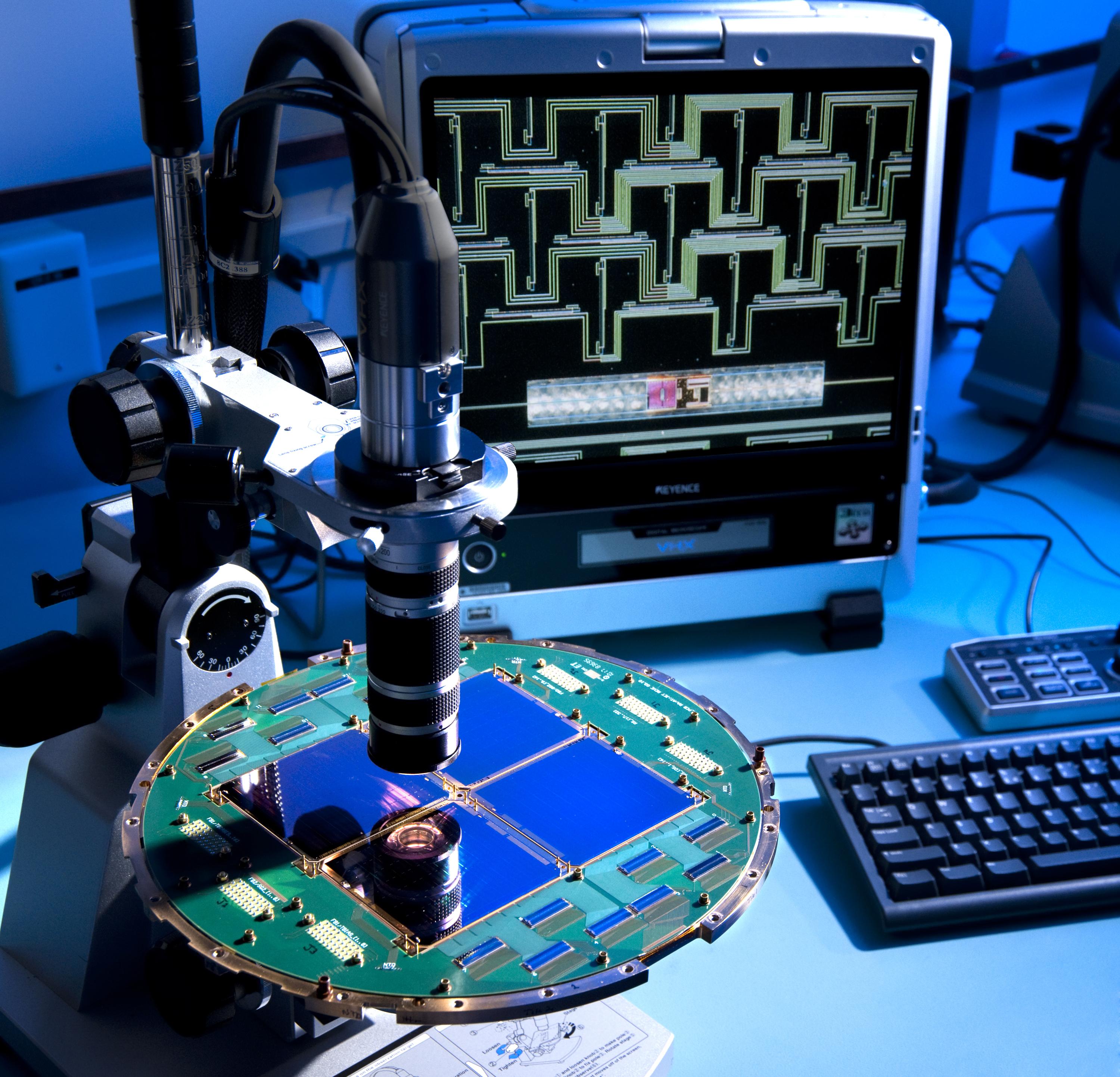
| Описание | Superconducting Detectors for Study of Infant Universe
http://www.jpl.nasa.gov/spaceimages/details.php?id=PIA17993 http://www.jpl.nasa.gov/news/news.php?release=2014-082 The BICEP2 telescope at the South Pole uses novel technology developed at NASA's Jet Propulsion Laboratory in Pasadena, Calif. The focal plane shown here is an array of devices that use superconductivity to gather, filter, detect, and amplify polarized light from the cosmic microwave background -- relic radiation left over from the Big Bang that created our universe. The microscope is showing a close-up view of one of the 512 pixels on the focal plane, displayed on the screen in the background. Each pixel is made from a printed antenna that collects polarized millimeter-wavelength radiation, with a filter that selects the wavelengths to be detected. A sensitive detector is fabricated on a thin membrane created through a process called micro-machining. The antennas and filters on the focal plane are made from superconducting materials. An antenna is seen on the close-up shot in the background with the green meandering lines. The detector uses a superconducting film as a sensitive thermometer to detect the heat from millimeter-wave radiation that was collected by the antenna and dissipated at the detector. A detector is seen on the close-up shot in the background to the right of the pink square. Finally, a tiny electrical current from the sensor is measured with amplifiers on the focal plane called SQUIDs (Superconducting QUantum Interference Devices), developed at National Institute of Standards and Technology, Boulder, Colo. The amplifiers are the rectangular chips on the round focal plane. The focal planes are manufactured using optical lithography techniques, similar to those used in the industrial production of integrated circuits for computers. |
|---|---|
| Источник | http://photojournal.jpl.nasa.gov/jpeg/PIA17993.jpg |
| Время создания | 2014-03-17 17:09:12 |
| Автор или правообладатель | NASA/JPL-Caltech — Лицензия: Public domain (в общественном достоянии) |
| Другие версии файла | — |
Источник файла — сайт Wikimedia Commons, куда он был загружен под одной из свободных лицензий ( https://commons.wikimedia.org/wiki/File:PIA17993-DetectorsForInfantUniverseStudies-20140317.jpg ). Авторов, работавших над этим файлом см. в истории файла: https://commons.wikimedia.org/w/index.php?title=File:PIA17993-DetectorsForInfantUniverseStudies-20140317.jpg&action=history


В общем случае в статьях энциклопедии Руниверсалис файлы используются в соответствии со статьёй 1274 Гражданского кодекса Российской Федерации.
История файла
Нажмите на дату/время, чтобы увидеть версию файла от того времени.
| Дата/время | Миниатюра | Размеры | Участник | Примечание | |
|---|---|---|---|---|---|
| текущий | 20:25, 15 декабря 2023 | | 3000 × 2884 (842 КБ) | I, Robot (обсуждение | вклад) | == Описание == {{Изображение | описание = Superconducting Detectors for Study of Infant Universe <p>[http://www.jpl.nasa.gov/spaceimages/details.php?id=PIA17993 http://www.jpl.nasa.gov/spaceimages/details.php?id=PIA17993] </p><p>[http://www.jpl.nasa.gov/news/news.php?release=2014-082 http://www.jpl.nasa.gov/news/news.php?release=2014-082] </p><p>The BICEP2 telescope at the South Pole uses novel technology developed at NASA's Jet Propulsion Laboratory in Pasadena, Calif. The focal plane shown... |
Вы не можете перезаписать этот файл.
Использование файла
Следующий файл является дубликатом этого файла (подробности):

- Файл:PIA17993-DetectorsForInfantUniverseStudies-20140317.jpg на общем хранилище
Следующая страница использует этот файл:
