


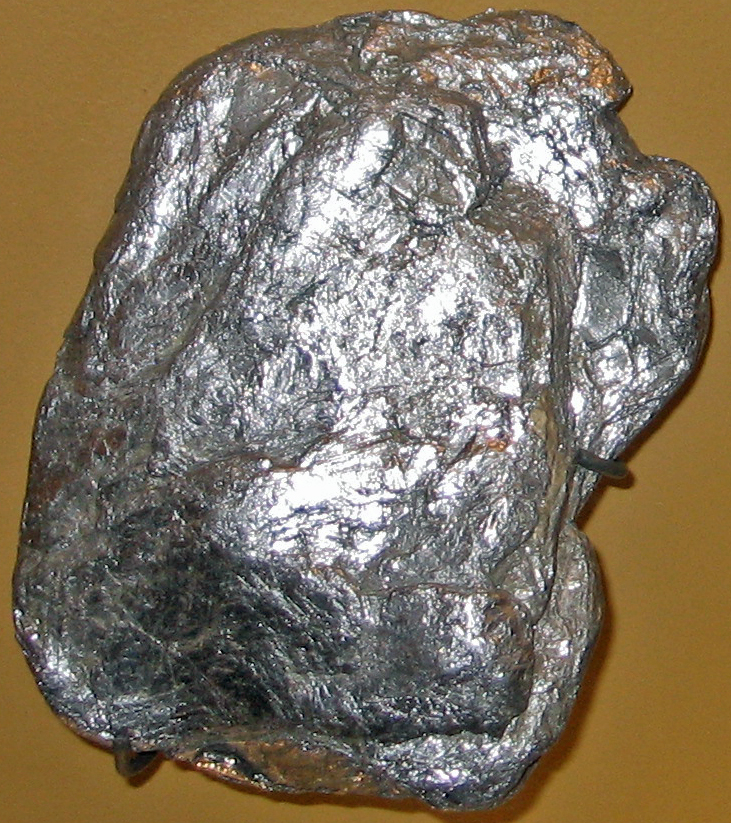
Файл:Molybdenite (Australia) (19055908840).jpg

Исходный файл (731 × 823 пкс, размер файла: 652 КБ, MIME-тип: image/jpeg)
Описание
| Описание | Molybdenite from Australia. (CMNH 4647, Cleveland Museum of Natural History, Cleveland, Ohio, USA) A mineral is a naturally-occurring, solid, inorganic, crystalline substance having a fairly definite chemical composition and having fairly definite physical properties. At its simplest, a mineral is a naturally-occurring solid chemical. Currently, there are over 4900 named and described minerals - about 200 of them are common and about 20 of them are very common. Mineral classification is based on anion chemistry. Major categories of minerals are: elements, sulfides, oxides, halides, carbonates, sulfates, phosphates, and silicates. The sulfide minerals contain one or more sulfide anions (S-2). The sulfides are usually considered together with the arsenide minerals, the sulfarsenide minerals, and the telluride minerals. Many sulfides are economically significant, as they occur commonly in ores. The metals that combine with S-2 are mainly Fe, Cu, Ni, Ag, etc. Most sulfides have a metallic luster, are moderately soft, and are noticeably heavy for their size. These minerals will not form in the presence of free oxygen. Under an oxygen-rich atmosphere, sulfide minerals tend to chemically weather to various oxide and hydroxide minerals. Molybdenite is a molybdenum sulfide mineral (MoS2). It has hexagonal crystals, metallic luster, a bright silvery color, and a dark gray streak. It is fairly soft (H=2) and has one cleavage. Molybdenite is especially distinctive in being flexible - thin scales or plates of molybdenite will easily bend but won't snap back into shape like biotite or muscovite mica. Molybdenite is nearly identical to graphite (C) in its physical characteristics (see: www.flickr.com/photos/jsjgeology/sets/72157650963514503). Graphite is a principally a metamorphic mineral. Molybdenite is usually an igneous mineral, occurring in hydrothermal veins and pegmatites. It also occurs in some contact metamorphic rocks (skarns - www.flickr.com/photos/jsjgeology/sets/72157646562268189). Photo gallery of molybdenite: |
|---|---|
| Источник | Molybdenite (Australia) |
| Время создания | 2011-01-17 02:38 |
| Автор или правообладатель | James St. John — Лицензия: CC BY 2.0 (Creative Commons Attribution 2.0) https://creativecommons.org/licenses/by/2.0 |
| Другие версии файла | — |
Источник файла — сайт Wikimedia Commons, куда он был загружен под одной из свободных лицензий ( https://commons.wikimedia.org/wiki/File:Molybdenite_(Australia)_(19055908840).jpg ). Авторов, работавших над этим файлом см. в истории файла: https://commons.wikimedia.org/w/index.php?title=File:Molybdenite_(Australia)_(19055908840).jpg&action=history
_(19055908840).jpg)
_(19055908840).jpg&action=history)
В общем случае в статьях энциклопедии Руниверсалис файлы используются в соответствии со статьёй 1274 Гражданского кодекса Российской Федерации.
История файла
Нажмите на дату/время, чтобы увидеть версию файла от того времени.
| Дата/время | Миниатюра | Размеры | Участник | Примечание | |
|---|---|---|---|---|---|
| текущий | 14:49, 18 ноября 2023 | | 731 × 823 (652 КБ) | I, Robot (обсуждение | вклад) | == Описание == {{Изображение | описание = <p>Molybdenite from Australia. (CMNH 4647, Cleveland Museum of Natural History, Cleveland, Ohio, USA) </p><p>A mineral is a naturally-occurring, solid, inorganic, crystalline substance having a fairly definite chemical composition and having fairly definite physical properties. At its simplest, a mineral is a naturally-occurring solid chemical. Currently, there are over 4900 named and described minerals - about 200 of them are common and about 20 o... |
Вы не можете перезаписать этот файл.
Использование файла
Следующий файл является дубликатом этого файла (подробности):
_(19055908840).jpg)
- Файл:Molybdenite (Australia) (19055908840).jpg на общем хранилище
Следующая страница использует этот файл:
_(19055908840).jpg&oldid=18762052)