


Файл:High-Current Copper-Brush Commutated Dynamo.jpg
Исходный файл (2439 × 1953 пкс, размер файла: 893 КБ, MIME-тип: image/jpeg)
Описание
| Описание | Text from public domain illustration:
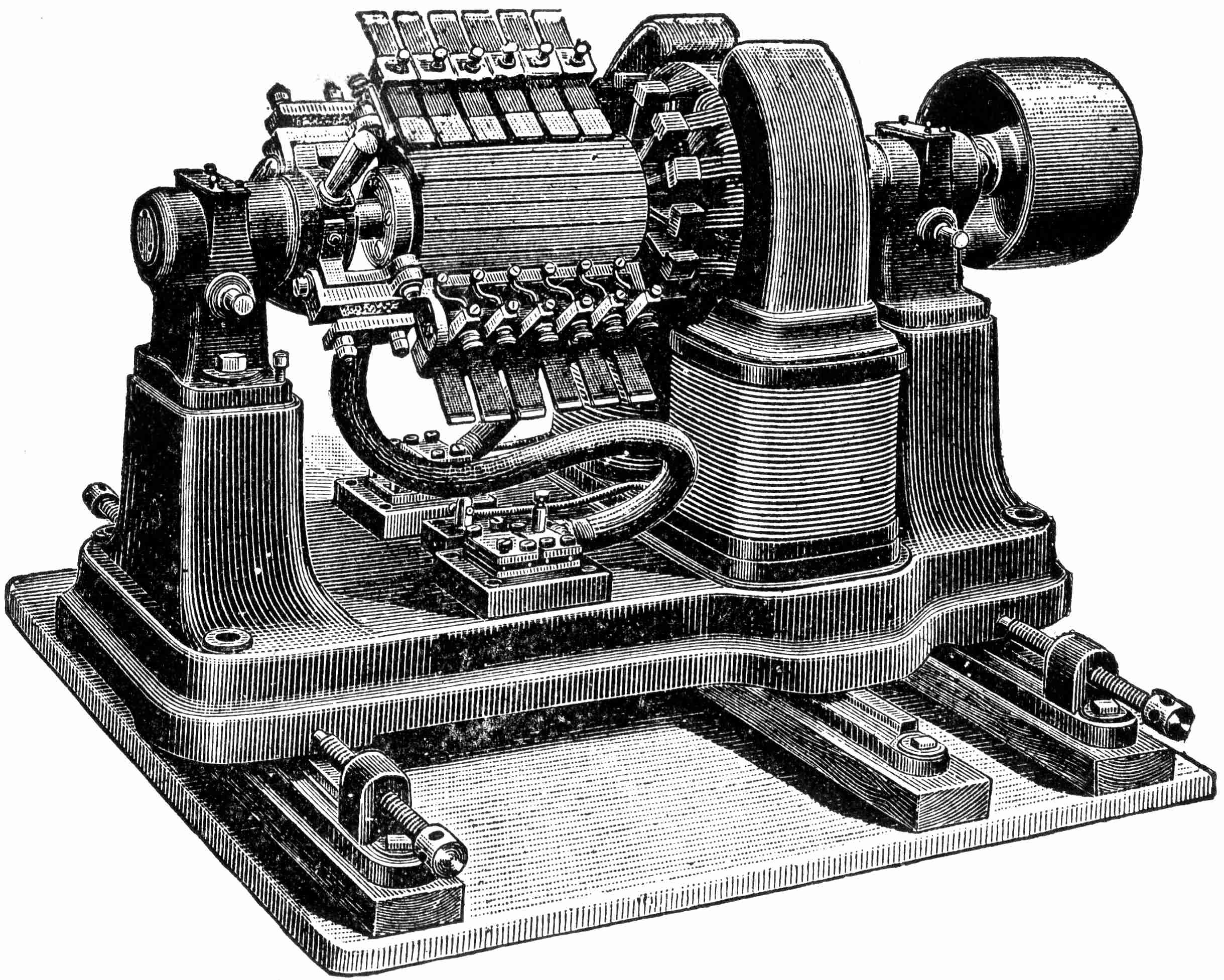
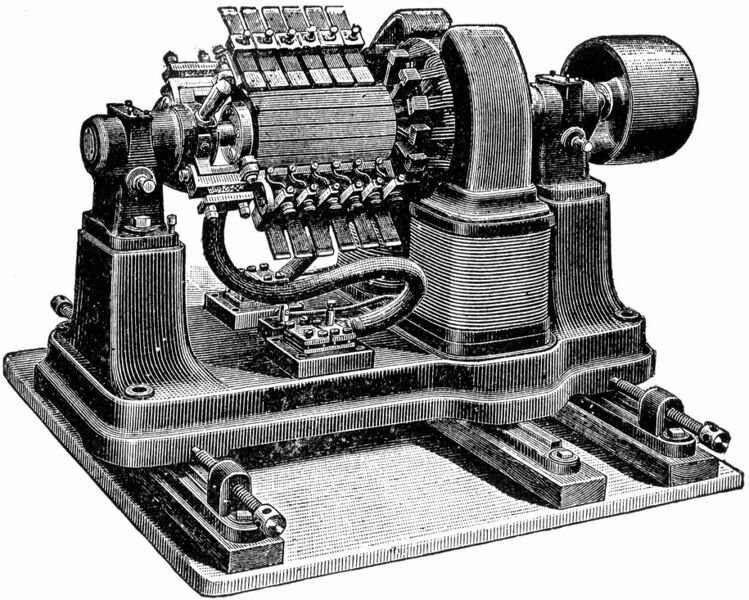
Figure 328: A large current low voltage bipolar dynamo built for electrolytic work and here shown to illustrate the large size commutator and brushes necessary to collect the large current.
My Notes
Public Domain source:
Scanned by Dale Mahalko, Gilman, WI, USA |
|---|---|
| Источник | |
| Время создания | |
| Автор или правообладатель | See WikiCommons page for author — Лицензия: Public domain (в общественном достоянии) |
| Другие версии файла | — |


Источник файла — сайт Wikimedia Commons, куда он был загружен под одной из свободных лицензий ( https://commons.wikimedia.org/wiki/File:High-Current_Copper-Brush_Commutated_Dynamo.jpg ). Авторов, работавших над этим файлом см. в истории файла: https://commons.wikimedia.org/w/index.php?title=File:High-Current_Copper-Brush_Commutated_Dynamo.jpg&action=history


В общем случае в статьях энциклопедии Руниверсалис файлы используются в соответствии со статьёй 1274 Гражданского кодекса Российской Федерации.
История файла
Нажмите на дату/время, чтобы увидеть версию файла от того времени.
| Дата/время | Миниатюра | Размеры | Участник | Примечание | |
|---|---|---|---|---|---|
| текущий | 03:11, 23 октября 2023 | | 2439 × 1953 (893 КБ) | Я, робот (обсуждение | вклад) | == Описание == {{Изображение | описание = Text from public domain illustration: <p>Figure 328: A large current low voltage bipolar dynamo built for electrolytic work and here shown to illustrate the large size commutator and brushes necessary to collect the large current. </p> <ul><li>The machine here illustrated gives 310 amperes at 7 volts when running at a speed of 1400 RPM, corresponding to an output of 2.17 kilowatts.</li> <li>Carbon brushes would not be suitable for this class of machi... |
Вы не можете перезаписать этот файл.
Использование файла
Следующий файл является дубликатом этого файла (подробности):

- Файл:High-Current Copper-Brush Commutated Dynamo.jpg на общем хранилище
Следующая страница использует этот файл:
