


Файл:Herx1 lc.gif
Herx1_lc.gif (445 × 189 пкс, размер файла: 13 КБ, MIME-тип: image/gif)
Описание
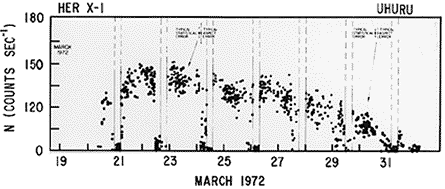
| Описание | This light curve of Her X-1 shows long term and medium term variability. Each pair of vertical lines deliniate the eclipse of the compact object behind its companion star. In this case, the companion is a 2 Solar-mass star with a radius of nearly 4 times that of our Sun. This eclipse shows us the orbital period of the system, 1.7 days.
The long term variability shown here is precession of a disk of accreting matter around the neutron star. This precession has a 35-day period. In addition, the neutron star in Her X-1 is also a pulsar with a 1.24 second pulse period. |
|---|---|
| Источник | NASA's HEASARC: Observatories, Goddard Spaceflight Center, Uhuru observations of Hercules X-1 |
| Время создания | 2003-06-26 |
| Автор или правообладатель | HEASARC Director: Dr. Alan P. Smale HEASARC Associate Director: Dr. Roger Brissenden Responsible NASA Official: Phil Newman Web Curator: Meredith Gibb — Лицензия: Public domain (в общественном достоянии) |
| Другие версии файла | — |
Источник файла — сайт Wikimedia Commons, куда он был загружен под одной из свободных лицензий ( https://commons.wikimedia.org/wiki/File:Herx1_lc.gif ). Авторов, работавших над этим файлом см. в истории файла: https://commons.wikimedia.org/w/index.php?title=File:Herx1_lc.gif&action=history


В общем случае в статьях энциклопедии Руниверсалис файлы используются в соответствии со статьёй 1274 Гражданского кодекса Российской Федерации.
История файла
Нажмите на дату/время, чтобы увидеть версию файла от того времени.
| Дата/время | Миниатюра | Размеры | Участник | Примечание | |
|---|---|---|---|---|---|
| текущий | 00:19, 23 октября 2023 | | 445 × 189 (13 КБ) | Я, робот (обсуждение | вклад) | == Описание == {{Изображение | описание = This light curve of Her X-1 shows long term and medium term variability. Each pair of vertical lines deliniate the eclipse of the compact object behind its companion star. In this case, the companion is a 2 Solar-mass star with a radius of nearly 4 times that of our Sun. This eclipse shows us the orbital period of the system, 1.7 days. <p>The long term variability shown here is precession of a disk of accreting matter around the neutron star. This pr... |
Вы не можете перезаписать этот файл.
Использование файла
Следующий файл является дубликатом этого файла (подробности):

- Файл:Herx1 lc.gif на общем хранилище
Следующая страница использует этот файл:
